Saturday, 7 September 2019

Dwarf Seahorses (h.Zosterae) Hunting


We have an awesome fish shop that's opened up within driving distance. My H.erectus came from there last Christmas and are doing great!  I was, however, incredibly surprised to see them stocking H.zosterae recently.  Just as I was getting the desire to own them again. Fate? Maybe!  They were kind enough to hold them for me until we came back from holiday.

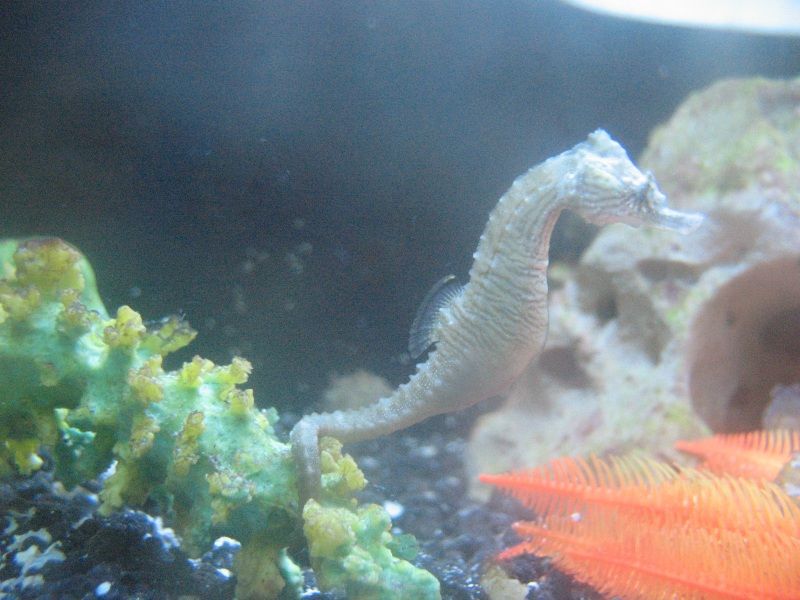
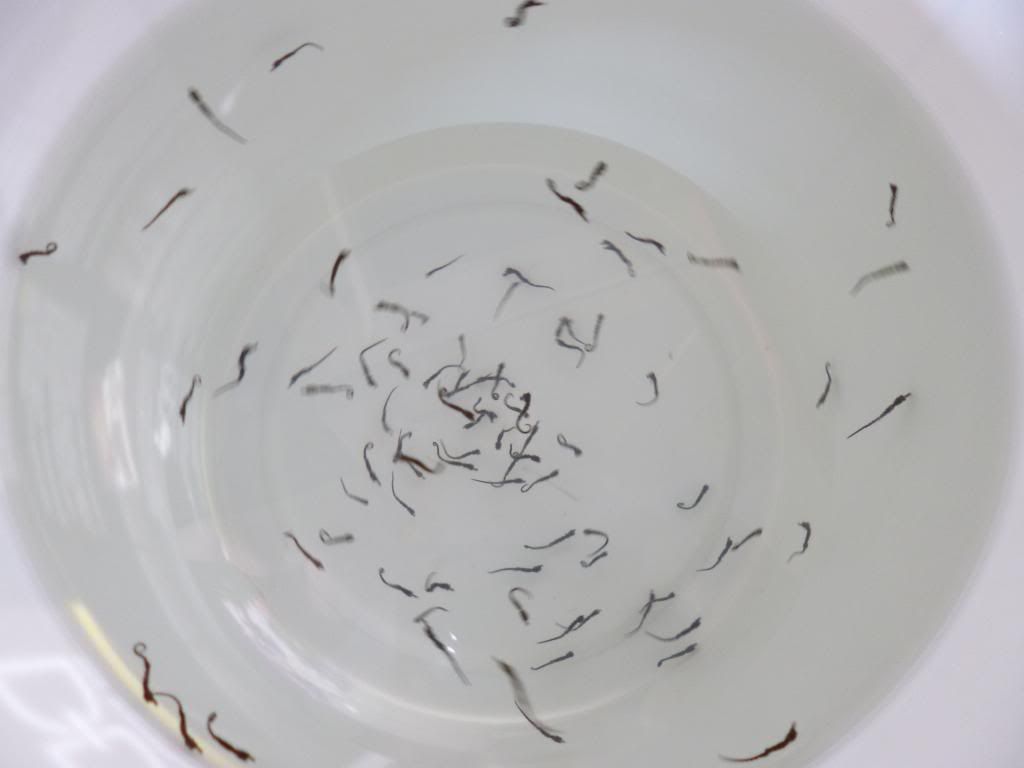
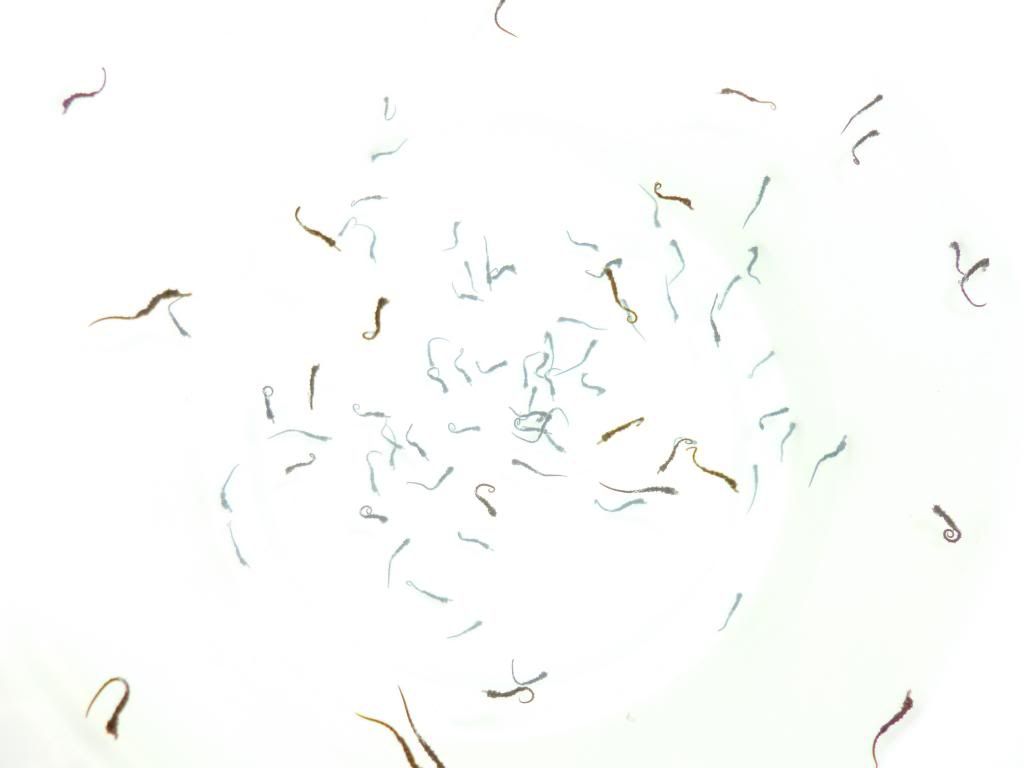
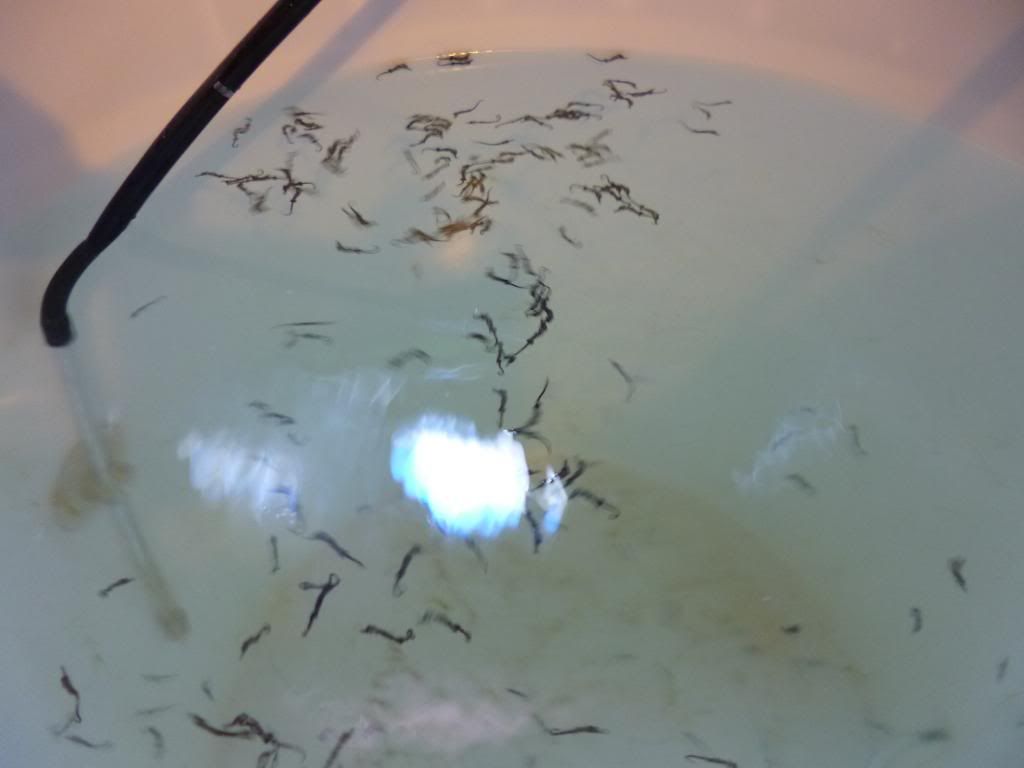
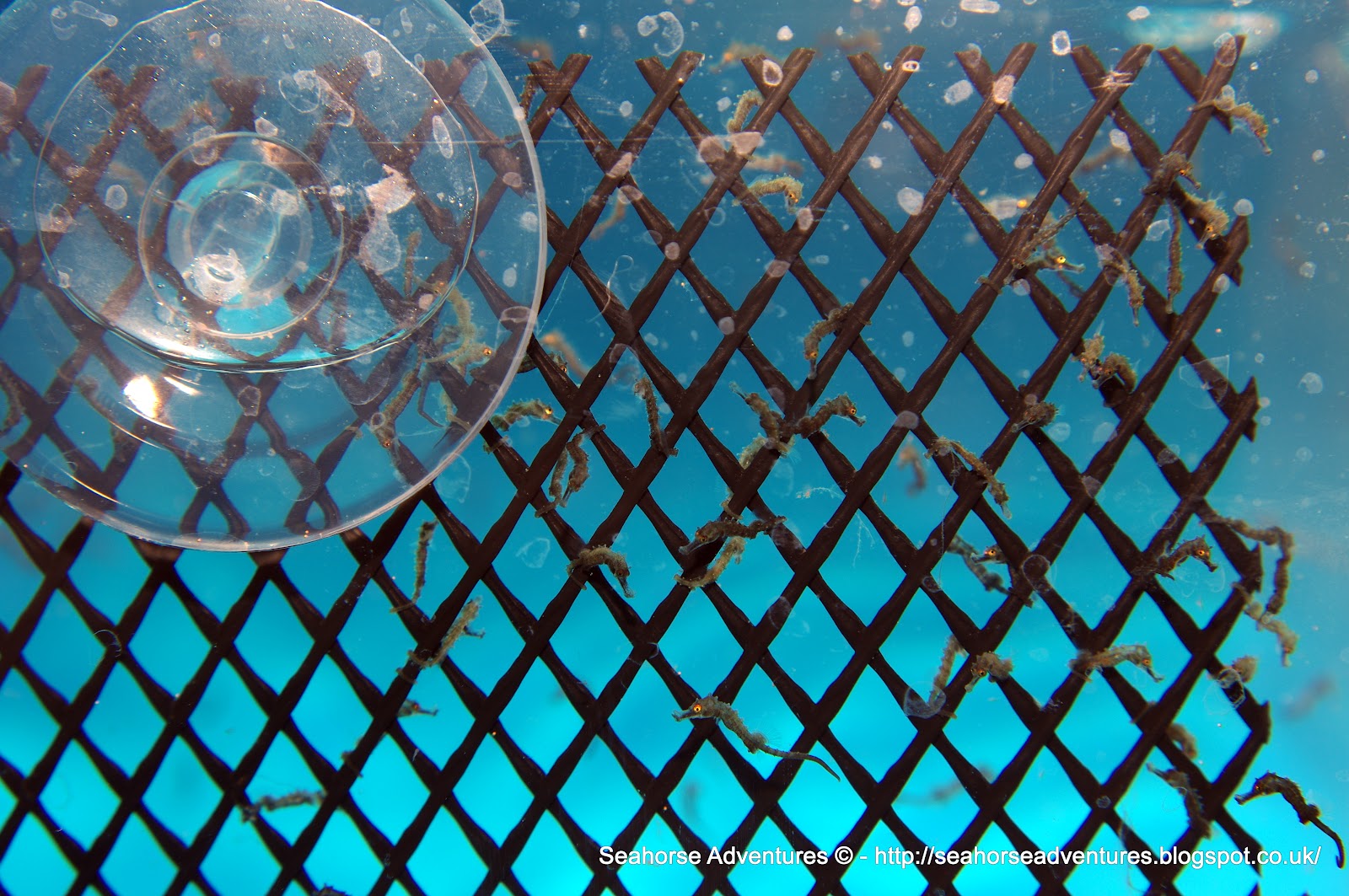
We had a little surprise when we collected them....in fact it was such a little surprise that if you don't look closely enough you might just miss it in this video! True to nature, they have been doing what they prolifically do and have been having babies!  We have 3 adults, 2 older juveniles, 1 younger juvenile and a teeny, tiny baby. Look very closely and you can see it in the video!

I think it's fair to say, you'll be reading more from me in coming weeks.

Monday, 17 December 2018

I'm Back!

That is, I have seahorses again, or to be more specific H.erectus. I have had a lonesome seahorse of unknown species for a while now but I decided that he needed a friend and so popped into a nearby aquatic store to place an order. As fate would have it, they actually had seahorses in stock for the first time! My husband and I decided to get two and pensively looked at eachother when deciding whether to get males or females. 

The happy couple have been flirting away already, so at the moment I'm hoping the high flow can prevent the inevitable!

This feels a bit like a new beginning, and as the other seahorse is named Popcorn (same name as one of my first seahorses) I have decided to call these Cosmo and Orion, also the names of two of my first (successful) seahorses.

Monday, 2 July 2018

So this happened!

I really wasn't planning, or expecting to get seahorses again quite so soon but I was gifted a pair of "H.kuda" from my wonderful husband, (who thought I was seahorse sulking for a while) and I have to say I was over the moon!

Losing my last seahorse, one that I bred myself 7 years ago, was heartbreaking so I really hadn't planned on diving back in quite so soon. In the back of my mind I had thought that maybe a little tank of dwarf seahorses would be amazing at some point in the future but a lot of planning needs to go into that.

You know, the funny thing is that its been so long that I feel completely new to the whole experience of owning seahorses. One thing is for sure, that is that the World of seahorses, marines, aquatics, just moves so bloody fast that things change on a pretty much daily basis! So, don't be surprised if I start posting questions!

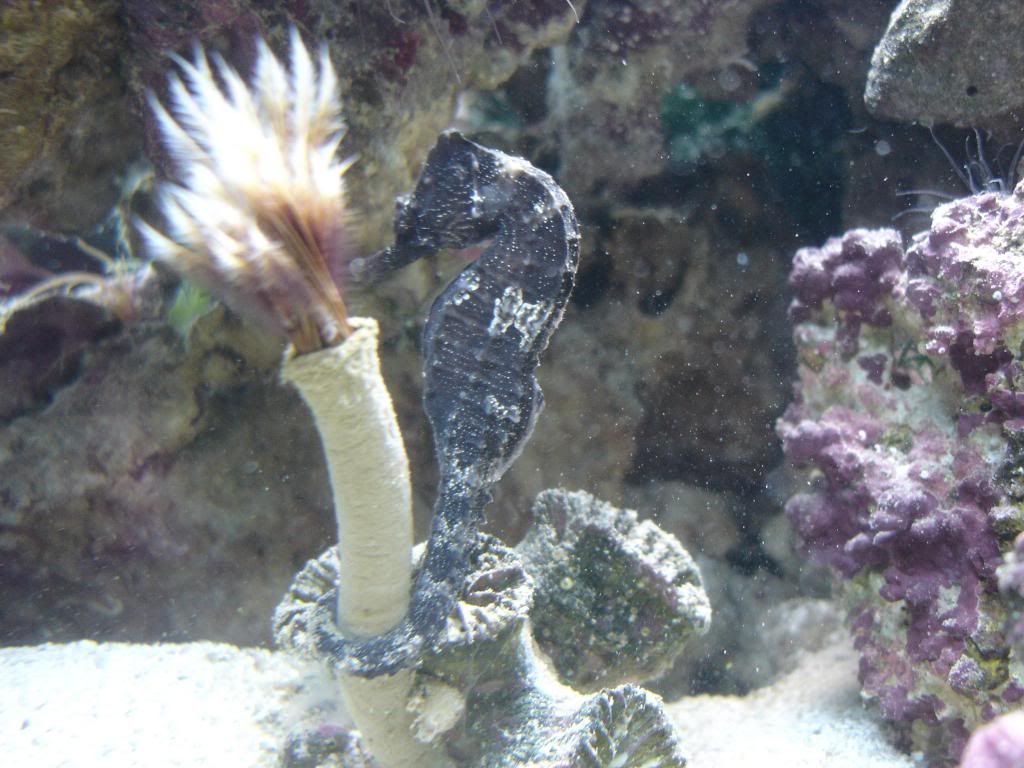
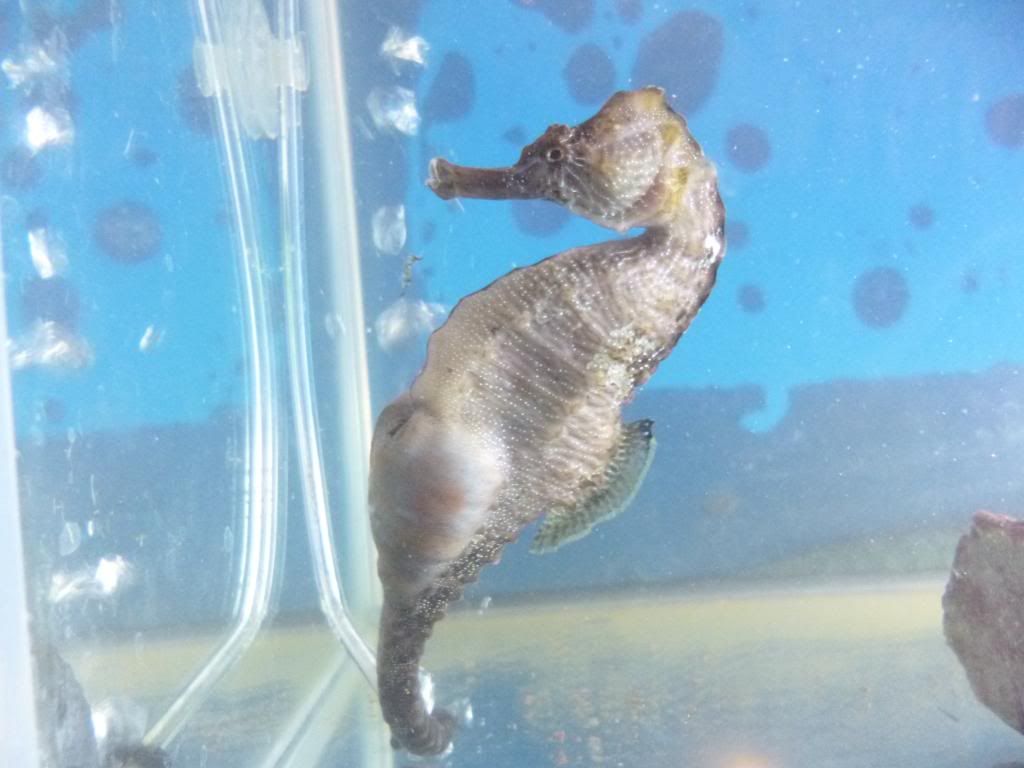
One thing I'm quite uncertain about, and that is the species of these fellows. Although they were sold as H.kuda, my guess is that was the easiest label to get them in on....I don't know, does that even still happen with seahorses being mislabelled deliberately to get them through customers/DEFRA. It has been suggested that they might be H.hippocampus but I can't see it personally. If I look at their eye spikes and crown, they just don't seem to match up. My initial thoughts are that they are a hybrid of some sort but I have a few friends that I consider experts in the seahorse world and know their stuff so I will ask them what they think. Watch this space!

And if you are still following me after all these years, thank you!

Wednesday, 10 September 2014

Silence of the Seahorses

So, I can't not acknowledge that I have had a prolonged period of absence from my blog.  The truth is that I have been having a bit of a heart to heart with myself and have decided to take a bit of a break from breeding seahorses.

This doesn't mean that I will be without seahorses; au contraire!  I will still have my adults and a couple of the babies from my most recent brood (these are actually now around 11 months old!).

If you have read my page about my other pets you will know that I have a sickly dog, and have done for a while now.  The last few months have been tumultuous with him but we now feel that we are, *fingers crossed*, on the road to recovery.  Work is also being very demanding at the moment and so I feel that I need to have more family time, and have more days out with my dogs and my wonderful husband.  I have also started working with a local animal rescue and I absolutely love this work.  Its time consuming, emotional and demanding, but I get so much personal satisfaction out of it.  I had a conversation with one of my "rescue" colleagues a while back where we discussed the "pet trade", and my eyes were opened somewhat and changed my view on many things to do with the pet trade.

Those of you who own seahorses will know that holidays are really hard unless you have someone on your doorstep who you can trust explicitly to look after them for you.  Baby seahorses are near impossible.  Until they are of decent size and eating frozen food, I find it hard to be away from them for too long.  In fact recently, we had a holiday and booked a cottage just 20 minutes away from home so that I could come back every day and feed the seahorses.  It was bliss!

My facebook group; Seahorse Adventures is still very much in full swing and will continue to do so.  We have a wonderful bunch of helpful people, so if you have FB, stop by and say hello.

I will still post on here from time to time and keep you up to date with anything new - in fact, I'm thinking about re-vamping my big seahorse tank so that may well be my next blog.

For now, thank you for reading and look after those swimmy swims!

Tuesday, 28 May 2013

A Serious Drug Problem....

In the UK we have a huge lack of access to drugs that can potentially save the life of a seahorse.

By the time most keepers realize that there is a serious problem with their seahorse, the seahorse often requires immediate treatment with antibiotics to give it a good chance of recovery.  Whereas in other countries effective drugs are readily available at most fish stores, over here most are not even available through vets, let alone over the counter at a fish store.  


With this in mind, the best thing we can do for our seahorses is to take preventative measures to try and avoid issues from arising.  Always make sure that your seahorses are in optimum condition at all times.  Here are some things that you can do to help prevent illness.

  1. Make sure that you purchase your seahorses from a reputable source.  Do not purchase wild caught, tank raised, or captive bred seahorses that have been kept in a system that has their tanks on a combined system mixing water from tanks that contain either of the aforementioned types of seahorses.
  2. Do not overcrowd your tank. Remember, seahorses are messy eaters and require more volume per inch than most other fish.  Check the size of the tank that you keep the seahorses in.  If you are just about meeting the bear minimum requirements you may quickly find that your tank becomes unmanageable.
  3. Keep up with Tank Maintenance.  Make sure that you stick to your tank maintenance routine, including regular water changes and checking that there are no dead spots* within the tank.  Check that all tank mates (including corals) are suitable to keep with seahorses (Seahorse.org has a great guide).  Use a probiotic, such as Sanolife to help with the control of pathogenic bacteria.  
  4. Keep an Eye on the Temperature.  High temperatures in a seahorse tank can be a real problem and whilst a seahorse might live in a location where the temps reach the high 70's in the wild, in captivity this can be a killer.  Growth rates of bacteria increase greatly in higher temperatures and so its always best to keep temperatures in the low 70's for tropical species.
  5. Feed a Varied Diet.  As well as offering different types of shrimps, I always find it a good thing to have a variety of brands too as this seems to help prevent seahorses becoming fussy eaters.  Also, if you are lucky enough to be able find a live food source, this can also be introduced to the seahorses diet and is a great way of introducing vitamins and supplements.
  6. Do not mix species.  For the same reason as indicated in point 1, seahorses of different species should not be mixed to avoid introduction of pathogens from one species to another.  This includes any fish from the same family as seahorses, i.e. pipefish.
  7. Do not delay treatment.  If you suspect that your seahorse may be ill, or you notice something different about your seahorse, either in appearance or character, seek immediate advice.  Joining a forum like seahorse.org or fusedjaw can be a life saver.  Refrain from getting advice from a single person in private as this can be detrimental to the seahorses welfare if they aren't as experienced as you think they are.  Even if they are extremely knowledgeable, its easy to get distracted, confused or miss a vital piece of information and inadvertently give bad advice.  This can quickly and easily be corrected if the advice has been given in public.

*Areas where detritus is allowed to accumulate.

Sunday, 21 April 2013

Questions that I get asked

Through this blog, Facebook and various other forums that I belong to, here are some common questions that arise:

Q: What is a feeding station

A:  A feeding station is a device that is placed inside the tank where the seahorses eat their food from.  A feeding station can be anything from an upturned shell, to a specifically designed seahorse feeding station which attached to the glass of the tank.  Seahorses can be easily trained to eat from a specific location.  The benefits of using a feeding station is that you can check that all seahorses are eating well; if you have other fish in the tank, they will feed separately so you know they aren't being out-competed for food.  Another benefit is that it adds less waste to the tank as you are able to remove any uneaten food from the station.

Q: How can I remove algae from seahorses

A: Its quite normal for seahorses to grow algae on them in tanks that have problem or nuisance algae (this is quite common in new tanks).  Although the algae won't actually harm the seahorse, if you would prefer to remove it, you can do this using a soft baby toothbrush.

Q: How many times a day should I feed my seahorses

A:  Seahorses have a rudimentary digestive system which lacks a true stomach.  This means that there body does not hold onto reserves in the same way that other animals do.  You should ideally feed your seahorses 3 times a day and certainly no less than twice a day.  Each feeding should be placed equally apart so that you are not feeding too close together or too far apart.

Q: What do seahorses eat

A: You should feed your seahorses on a variety of food including; mysis, krill, brineshrimp (brineshrimp should be fed as a treat and not a staple).  If you are lucky enough to have access to live food, you can add live mysis, or river shrimp - be sure to feed your feeder shrimp with a suitable diet.

Q: Why is my seahorse so small

A: Depending on what species of seahorse you have will very much dictate the size that your seahorse will grow, for example H.fuscus are significantly smaller than H.reidi.  However, just like humans you can get smaller seahorses in a brood.  Make sure that you are feeding your seahorse a suitably enriched diet and a suitable aquarium to live in.  As long as your seahorse is healthy, try not to worry too much.  If you have something that is worrying you its always worth asking for advice on a specialised forum such as FusedJaw.com or Seahorse.org

Q:  I have seen a tiny seahorse at my local fish shop and am very tempted.  Should I buy it?

A: Tami Weiss has recently written an article about what to look for when purchasing seahorses.  This is a must read article for all those embarking on their journey with keeping seahorses.  The size and shape of a seahorse is especially important, as Tami demonstrates in this illustration.

With kind permission of Tami Weiss, http://www.fusedjaw.com/
The full article can be read here - FusedJaw

-x-
If there are any other questions that you would like answered, or general advice on keeping seahorses, why do you join my Facebook group: Seahorse Adventures

Wednesday, 13 March 2013

Brood Comparisons

So, we've had quite a few broods lately which I've already told you about.  Ed, has been a real trooper and seems to have delivered about 10 broods in the last 4 weeks - possibly a little exaggeration but it does seem like our seahorses have chosen the most inconvenient moments to deliver broods lately; usually just as we are running out the door or last thing at night when we're just off to bed!  I normally like to move the male to the nursery but every time they have caught us out.

Following the first brood being born to one of our other males, I thought it would be good to post a couple of pictures which might show the comparison between a first brood born compared to a brood born to an older, more established seahorse.

First of all, I'll tell you a little about both boys (the birth dads).

Ed
Ed is my main brood male; not because that's what I decided but because that's what the seahorses decided.  I have a few males in one tank but Ed is the only one who has chosen to give me a brood, up until now!

I got Ed in July 2009, and he was probably around 6 months old which would now make him around 4 years old.  He's now a strapping lad, measuring around 8 inches.

This is Ed the first week that I got him
And this is him delivering one of his more recent broods.  He looks skinny in this picture as its quite common for him to go off food a day or two before the birth
Midge
Midge is one of my own home grown babies.  I decided to keep him as at a year old as he hadn't grown much and so appeared to be a runt.

Midge at a year old
Midge has grown since, but I don't think he will ever grow to be quite as big as his daddy.  He is now around 4.5 inches at around 2.5 years old so there really is little chance of him getting much bigger.

These are the pictures from the two broods delivered.  The first two pictures show Ed's babies, and the third show's Midges babies.

Ed's Brood - we lost a lot of these to the tank which is why the brood seems quite small

Also Ed's brood

Midge's first brood
You should be able to see from the pictures that Ed's babies are swimming quite normally, whereas Midge's babies are mostly floating on the surface.  Unfortunately, this is quite common in first broods or broods where the male is not conditioned.  

Since they were born, Ed's babies are doing phenomenally with few losses and are dabbling with frozen food already.  Sadly, we have lost most of Midges babies but the remaining ones are doing okay now.

More to follow....


Thursday, 7 March 2013

Double trouble

We had another brood born yesterday. The day after my main male delivered. We didn't expected it as the make in question didn't look particularly pregnant. The brood is quite small and the fry don't look particularly strong so I'm not holding out an awful lot of hope for them.

Pictures of the various broods to follow.

Wednesday, 6 February 2013

Skimmer!

My new skimmer arrived today and its a beast!

I deliberately went for oversized so that it will help with the organics created by the messy seahorses!
Posted by Picasa

Tuesday, 8 January 2013

Are You a Seahorse Breeder?

The Seahorse Breeders Registry has been set up to provide a singular list of seahorse breeders around the world promoting captive bred seahorses as an alternative to being removed from the wild.  The program is working to achieve this by encouraging captive breeding programs of seahorses using sustainable, responsible techniques.

If you are a breeder, you can sign up on the Seahorse Breeders Registry website.

Monday, 31 December 2012

The end of a great year!

2012 has been a great year for me both personally and as a seahorse keeper.  My seahorses have gone from strength to strength and they continue to provide me with some beautiful and healthy babies.  

In the last year, I have contributed to some online magazines and joined FusedJaw as a moderator following the relaunch of the FusedJaw forum.  I have been grateful to have met some wonderful new people within the seahorse and marine world and like to think that I now have some new friends as a result.

I am finishing 2013 on a high as I have had my first article published in UltraMarine magazine, and even had some babies born on Christmas day!

I would like to take this opportunity to wish everyone who reads my blog a very very happy, healthy and prosperous New Year.


Saturday, 24 November 2012

Boring Fish!

Yesterday, I was browsing through some forums and came across a relatively common theme; "seahorses don't do much", "seahorses are sedentary", "seahorses are boring". Au contraire! Another vast misconception.  In my experience, if seahorses are acting in this manner than they are trying to tell you that something is amiss.  That's not to say that they should be dashing around the tank constantly like Dory on speed, but to describe them in this manner is a little inaccurate.  Seahorses are a naturally inquisitive, active, playful creature and can often be found circulating the tank looking for prey (or flirting with each other, of course!).

Any seahorses that pretty much sit in one spot all the time most likely have an issue with the environment they are in; flow to high, tank mates causing stress, water conditions off kilter or in the worse case, illness.

If a seahorse is not truly captive bred they may not be used to life behind glass, so this can also be a cause of stress.

Friday, 9 November 2012

Gosh, it has been a while since I last posted and for that I do apologize!  Things have been busy with baby seahorses, juvi's and dwarfs and other exciting things which I will tell you about at a later date.

The baby seahorses are now approaching two months old and its funny because I really didn't think they were quite that old yet!  It just goes to show how important diaries/blogs are! We went through quite a lengthily phase of losing babies and I addressed all of the normal things; food, maintenance, water quality.  I was stumped.  Then my husband suggested that the water could be getting too cold for them of a night.  I never normally have a heater in the tank as the higher temps encourage bacteria growth.  However, anything was worth a try.  Since adding the heater, we haven't lost a single baby! So, it just goes to show that at times you really do have to review everything that you do and just because something has always worked before, doesn't mean its going to work again!

Thankfully, they are eating frozen now so hopefully they will start to fill out and grow quite rapidly.  I've been trying to take some decent pictures but the little darlings won't stay still long enough!  I have set myself a task today to try and take some decent pics and if I manage to, I will post some.

I'm currently looking into getting another species; I think I've made up my mind which one.  Its a species that I have had before and the fry are much harder to raise.  So, my first task is to source a suitable pair and then the second is to condition them for breeding.  Wish me luck in my task :)

Monday, 24 September 2012

Exciting News!


Some of you may well be aware that I have been an avid reader of a fantastic site dedicated to syngnathidae, called FusedJaw.  FusedJaw brings together many hugely knowledgeable people from the field for articles, photography and information.  

The great news is that FusedJaw now has a forum and I'm really excited and incredibly flattered to have been asked to join the moderating team.

So, if you want to find out more about seahorses, and discuss everything seahorsey, you can join up here:  http://seahorsetalk.fusedjaw.com/  The forum part is still in its infancy at the moment but there are exciting times ahead :)

Hope to see you there!

Tuesday, 18 September 2012

And Yet More Babies!

It seems that my seahorses are determined to thrust me back into the throws of dealing with newborns and so now my babies are having babies!  

I wasn't 100% certain but thought that a couple of my January babies had very impressive looking pouches.  Well, now I know why!  Only 6 babies from them so far but I'm almost certain there are more to follow!

These pictures are from those that were born at the weekend...I hope you like them.

Ooops, sorry about the dirty glass!


Sunday, 16 September 2012

Babies!

My male H. erectus has decided to make me work again and this morning has given birth to his first brood in 5 months!


Monday, 10 September 2012

Popcorn!

Well, my little girl didn't hold her popcorn colour.  She's slowly turning a more vibrant colour like the rest of "the yellows".  As the smaller April babies are starting to catch up with the bigger ones, I've added some from the other fry tank to "the yellows" tank so I'm thinking that could be why she is adopting a darker yellow.  In fact, I'm almost struggling to pick her out from the rest!


Its been a few months, but my adult male is pregnant again.  I have to admit, its been lovely having such a long break from newborns but I'm quite looking forward to trying my hand at them again.  If my male is true to form, then he will deliver a week on Saturday.  I will of course keep you posted.

Monday, 27 August 2012

Another Expensive Hobby!

Well, my penchant for taking photo's is just getting a bit silly now.  I'm finding that I'm taking photo's almost everyday with varying degree's of success.  If I'm honest, I kind of get it and I kind of don't.  I'm thinking about taking a photography class as I would love to have much better pictures of the seahorses than I have previously done.  At the same time, I don't want to bore you all with pictures!

I know its wrong to have favourites, but this little guy/gal is really standing out against the others for me at the moment.  I know its wrong to like seahorses for their colour, but this one is a super pretty popcorn colour.  Its quite shy so taking pictures is opportunistic rather than anything else.

Urgh! The glass looks terrible....it doesn't matter how much I clean it, the camera will always show up the bits I missed....sorry!
Prior to this little girl (I'll call her that for now as no signs of a pouch), I did have another favourite.  She was a beautiful brick red colour but sadly I lost her after she became caught up in one of the hitches.  I'm usually very careful about picking hitches to go in the fry tanks as heads become trapped quite easily.  So, if you are looking for hitches for small seahorses, make sure that they are flexible or don't have any areas that form a Y shape.

If you haven't joined our Facebook group yet, please do.  Its a great bunch of people on there and I'm also very flattered to have some very knowledgeable people on there. - https://www.facebook.com/groups/seahorseadventures/

Thursday, 23 August 2012

Power to the People!

Following my last post, I thought I should update with recent developments.  After being contacted by a number of people about their recommendations, the company in question have decided to work with a seahorse expert in order to provide better information and make improvements.  

Well done, to you both for working together to make a difference!

Thursday, 9 August 2012

Commercial Sellers Ripping People Off

I have recently been alerted to a new commercial seller of seahorse systems.  These people are selling seahorses and aquariums as one package.  They deliver the tank, and send the seahorses a few weeks later once the tank has cycled.  Sounds great, right?  Wrong!  The tanks that they are supplying are either 8 gallons or 16 gallons depending on whether you want 2 seahorses or 8.  It might be one thing if they were selling H.zosterae, but this place is supplying H.erectus; a seahorse that can very easily grow to 8 inches.

To anyone reading my blog; if you come across such a company that says that this kind of environment is OK for any of the larger species of seahorse, please keep your money and find somewhere else.  

I am absolutely shocked by this and consider it nothing short of animal cruelty.

I normally recommend that a pair of H.erectus should be kept in nothing short of a 30 gallon tank, or 25 gallons at a push.  Recommending a tank half this size for 4 is outrageous!

Edit:  It seems that I am not the only person concerned with this.  FusedJaw have also written a very detailed article.  You can read it here

Shopping Online